All in a name
Priestess, sorceress, enchantress but not temptress. Not witch. Not vestal virgin. Female shaman, shaman woman, shamaness? Shaman, this modern contrivance, is at least 17th century. It is corrupted from an ancient Siberian word, šaman, meaning “one who knows.” The female modern form is shamanka (just add the Russian feminine -ka). Shamanka is an established noun; I’ll adopt it, too. But, as there are many roots to the male noun, there’s only a single “Earth Mother” root for the Siberian female noun. Perhaps because “shamans were originally female.”
Priestesses don’t go hunting
To find ancient priestesses, we can go back in recorded history to Sumer, an early civilisation in the historical region of southern Mesopotamia (now southern Iraq) around 6,000 years ago (BC 4,000).
Nadītu the fallow are assistants to or advisors to a priest-king, or a high priestess. Not really what we would think of as a shamanka — someone who enters an altered state to commune with spirits, for the hunt. But, traces of a Mother Goddess, certainly.
Yes, there are female gods, priestesses and sorceresses throughout Egypt to around 4,160 ya (BC 2,160) and Ancient Greece and, of course, Rome. Many enter trance states to divine the future. But not talking with prey animals for good fortune during a hunt. Not mooing and braying, bucking and scraping the ground, wearing antlers and all that coarse, ancient, barbarism.
17,000 years before farmers
First shamanka
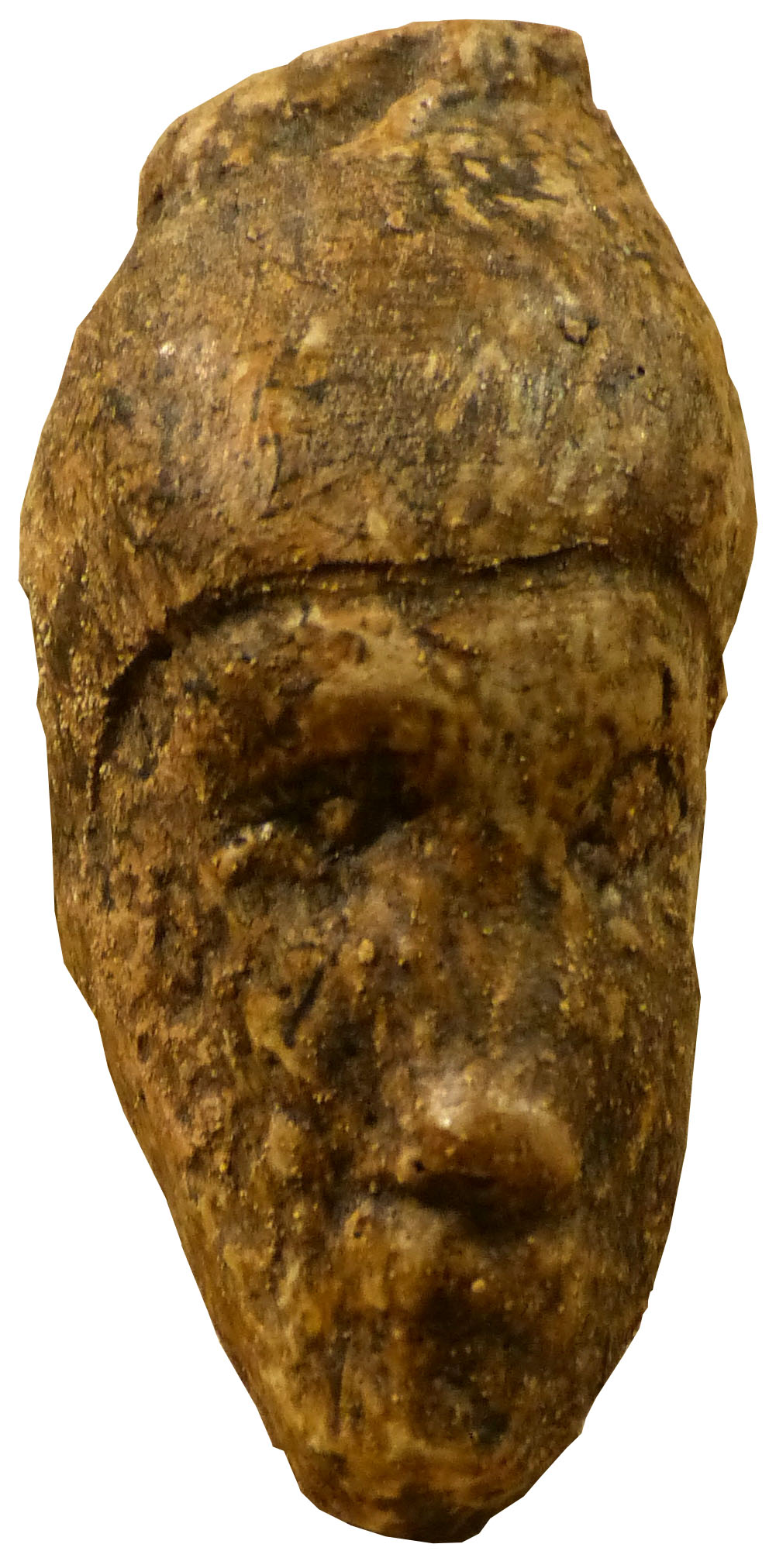
More interesting, to me, are the Pavlovian culture, Czech burials of women of around 27,000 ya. Mammoth hunters, living on the edge of the tundra. Thought to be shamanka.
Buried with mammoth shoulder blades, cuddling an arctic fox and fox teeth in her hand ready to be scattered for divination. 40+ years old, very, very old for these tough days, so very, very wise.
She had a facial deformity, which is echoed in a nearby carved ivory sculpture, so very, very important. A deformity would make her unusual, and seemingly gifted with supernatural powers.
The bones and the earth surrounding the body contained traces of symbolic red ochre, perhaps meaning a return to the earth, or rebirth.
She (and a few other shamanka, nearby) are the real deal.
A second shamanka, closer to home
And she is not alone. In 1934, workmen cutting a trench for the spa gardens at Bad Dürrenberg in central Germany found a woman buried upright, seated, drenched in red ochre, around 9,000 ya (BC 7,000). A mammoth-less Mesolithic world by then, but the same profession. Her kit is the fullest shamanka wardrobe ever excavated: a headdress of roe deer antler, pendants of animal teeth, boar tusks, turtle shells, mussel shells, crane and other bird bones, and — recent microscopic work has confirmed — feathers. A quirk in her upper neck vertebrae may even have let her hold her head to bring on flickering vision and trance — a built-in doorway to the otherworld.
In her arms lay a baby. In 2023, ancient DNA delivered the shiver: the infant was her great-great-grandson — four generations apart, laid together in one grave. And some 600 years after her burial, people dug a pit at her graveside and left antler masks as offerings. Her memory, and perhaps her office, outlived her by centuries. The real deal, twice over.
Venus figurines
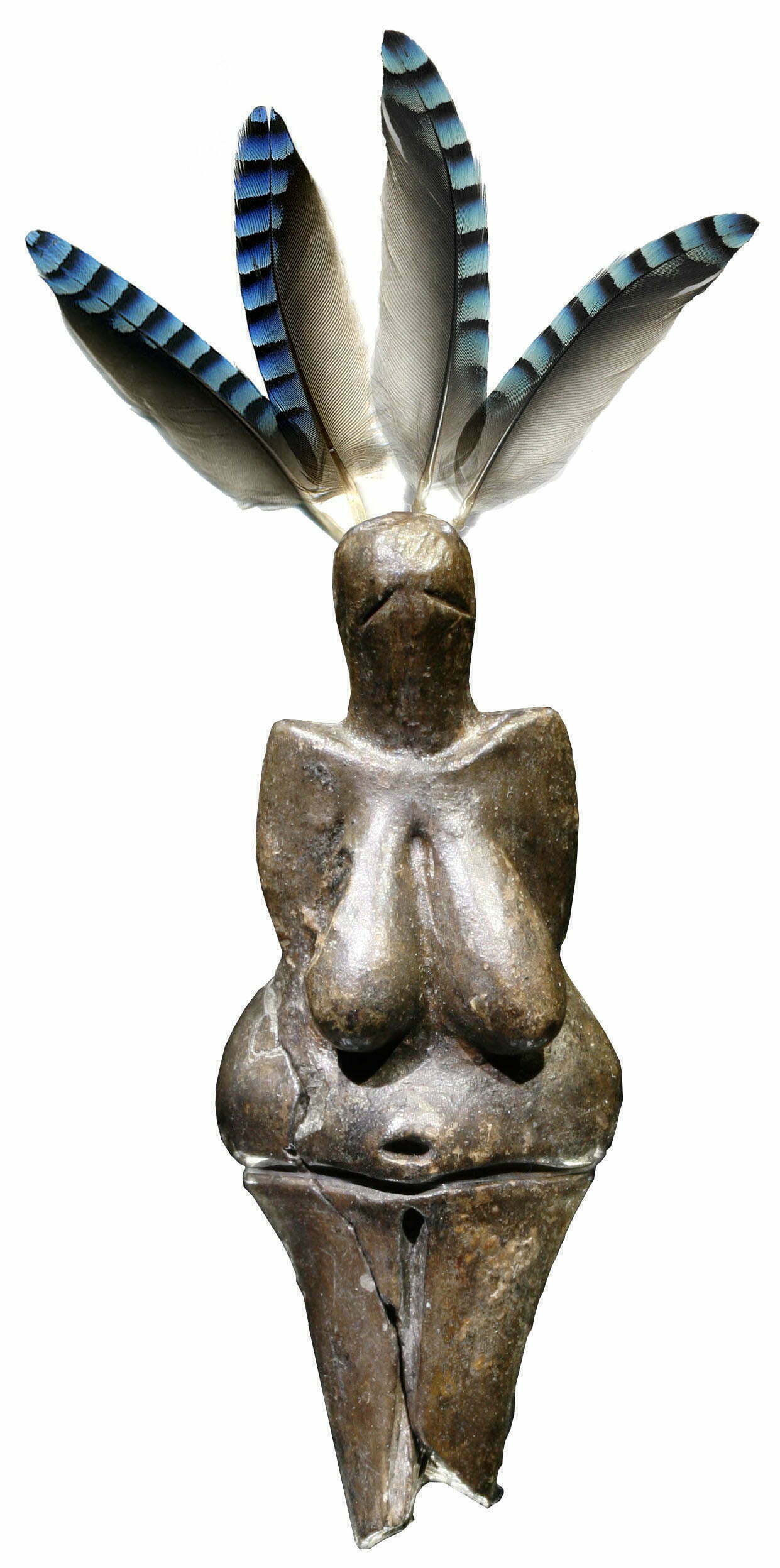
Also from the same site is the 4½ inch high Venus of Dolní Věstonice. They span from around 40,000-11,000 ya, across Europe; alas, none in the UK are in this list, thus far.
So, traces of a Matriarchal religion or a Great Goddess are slim here in the UK.
Geezers and trippy trances
Genetics
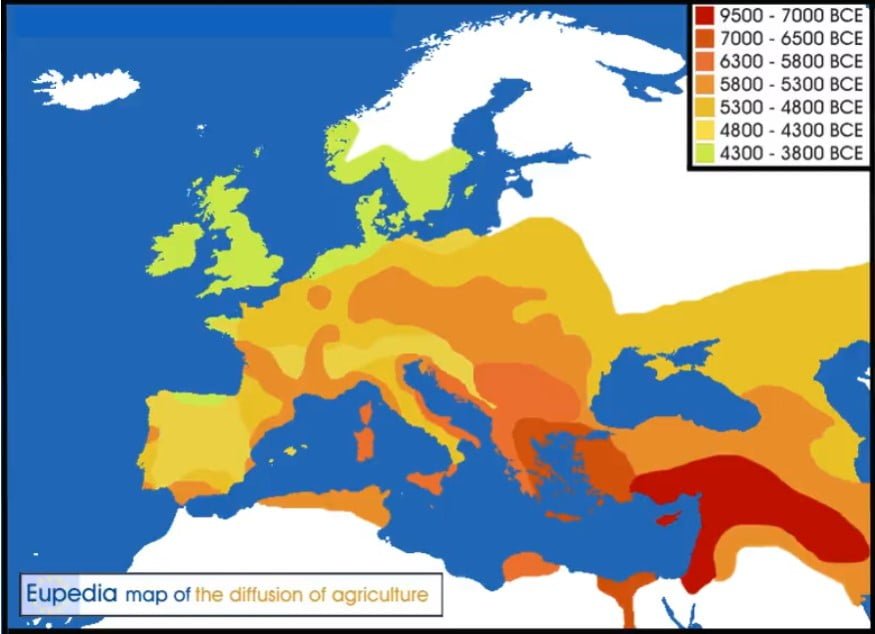
The new science of paleogenomics discovered that Neolithic lifeways spread from the Fertile Crescent: Mesopotamia, Sumer, Egypt, into Europe around 11,000 ya, reaching northwestern Europe by 6,000 ya (BC 4,000). Starting around 6,500 ya (BC 4,500), a new phenomenon of constructing megalithic monuments, particularly for funerary practices, emerged along the Atlantic façade.
Much was surmised before paleogenomics, by tracking the spread of farming. For us, there’s a chalk mound, 7½ miles SE of Stonehenge, dating to 5,700 ya (BC 3,700): Fussell’s Lodge.
Recall the pine posts are 10,000 ya (BC 8,000), Cursus 5,630 ya (BC 3,630), the ditch 5,100 ya (BC 3,100). Genetics also show that the lighter-skinned, lighter-eyed Beaker people arrived in Britain around 4,400 ya (BC 2,400), as Stonehenge 3 III was being fussed over, and slowly began to replace the olive skinned builders of Stonehenge.
The Amesbury Archer was likely an early visitor, from somewhere around the Alps, around the time the sarsens went up or soon after.
Sadly, for our shamanka, significantly more males than females are buried in the megaliths of the British Isles. That doesn’t mean the religious class were all men; more likely the dead geezers were chieftains, as the male line was dominant.
The genetics now backs the hunch. At Hazleton North long barrow in the Cotswolds, DNA from 35 people revealed five generations of one family, 5,700 ya — descent reckoned strictly down the male line, yes, but the tomb’s two chambered halves were organised around which woman a man was descended from. The geezers ran the line; the mothers structured the tomb. Our sha-ladies were in the architecture all along.
Petroglyphs
Britain has a lot of cup marks and spirals, which may have come from hallucinogenic mushrooms. Mix in some 13,000 year old ales — from a cave in Israel, mind, ours came very much later — for some proper wibby-wobbly spinnies. There is a theory that psilocybins took us out of the trees in Africa and have been walking alongside us since.
Much is too early for us, around 6,000 ya (BC 4,000), but there are later, even Bronze Age, around 4,500 ya (BC 2,500). And, most in Scotland, Northumberland, Yorkshire, some NW Wales. Not many in our SW England, and they are cup marks.

Probably a different way of life, tribes. Nothing like the spirals at Newgrange, Ireland. The dagger(s) and axes carved into Trilithon Two, Stone 53 are around 3,800 ya (BC 1,800) and probably male oriented.
Still, for our sha-ladies, there is a distinct route from what is now the Czech Republic 27,000 ya to Stonehenge 5,100 ya. That women were not in charge doesn’t mean they were not involved in trance rituals at Stonehenge. I bet they were.