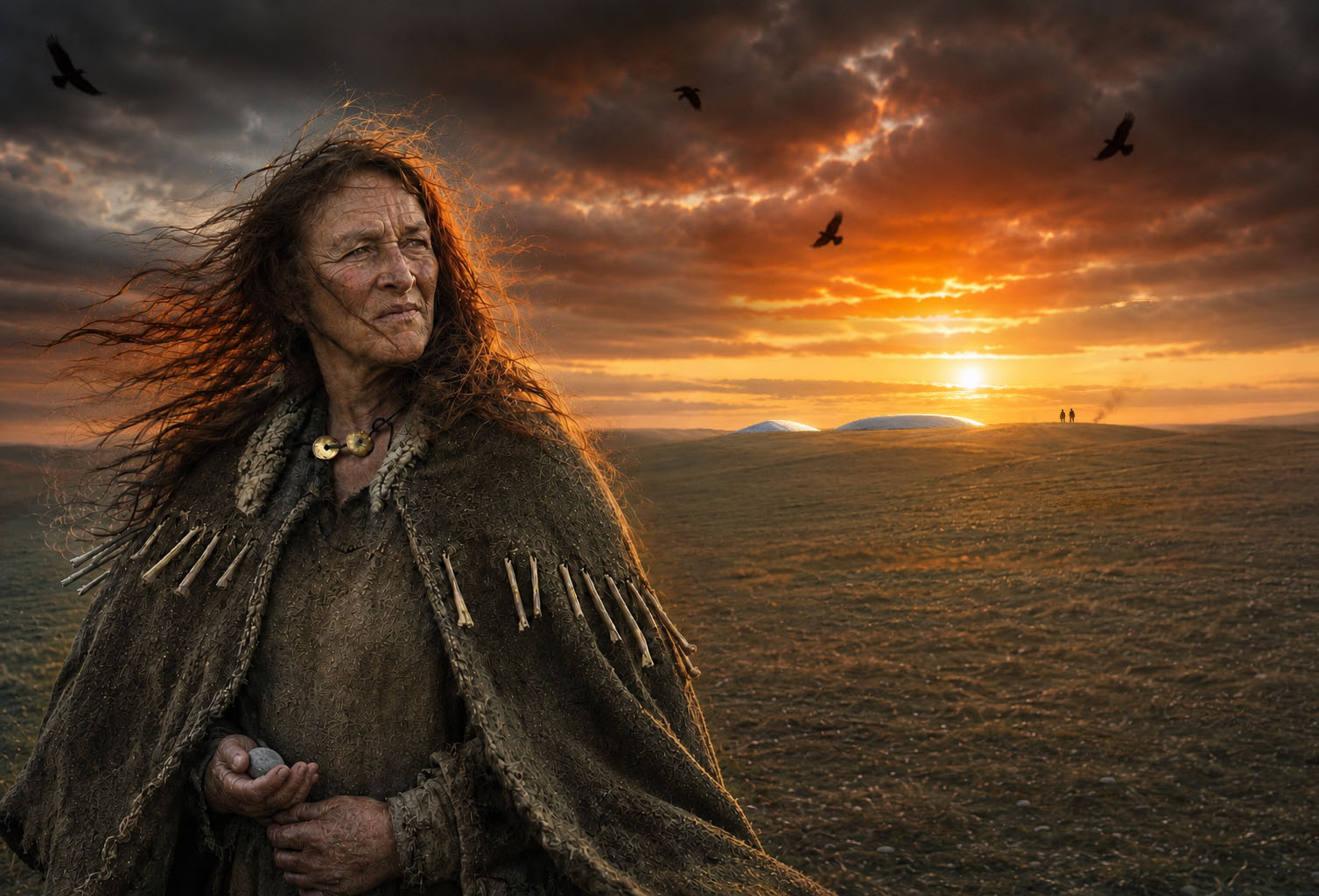
Well, well, well. The Upton Lovell shaman, dug out of a Wiltshire barrow in the early 1800s and shown off ever since as a bearded bloke in a bone cloak, turns out to have been a woman – a shamanka. Ancient DNA, three separate bones, the same answer each time. She lived around 3,800 ya (BC 1,800), and she was buried barely 10 miles (16km) west of Stonehenge.
Derived from the Tungusic word šaman meaning “one who knows” a shamanka is a female shaman. The word combines the term “shaman” with the Russian feminine suffix “-ka.”
What was in the grave
A metalworker’s kit, and a serious one: scribes, flints, a touchstone for judging the quality of metal, four fossil sponges hollowed into little cups, and a pouch trimmed with boar’s tusks. Pierced animal bones lay around the neck and the legs, the remains of a ceremonial cloak. An earlier study picked up gold traces on some of the stones, hinting she made gold-sheet ornaments wrapped over cores of bone, wood or copper. There was a greenstone battle-axe carried all the way from Cornwall, too, though whether that was for fighting or for stunning a pig before the hog roast, nobody can say.
The space science of its day
Turning rock into molten metal, at a moment when Britain sat on a rare pairing of tin and copper, was about as close to sorcery as the Bronze Age got. The Wiltshire Museum’s director calls metalworking “the space science of its day”, and whoever understood it would have held a special, perhaps spiritual, place in the tribe. The old assumption was that such a person had to be a man, which is precisely how the museum reconstructed her: beard and all.
The Francis Crick Institute’s ancient-genomics lab, led by Pontus Skoglund, ran the analysis. A tooth and a toe gave the same result as the first bone, and there was no sign of a second skeleton muddled in. She carried Beaker ancestry, typical for Britain then; she stood about 165cm (5 ft 4 in), tall for the time and robustly built; and she had arthritis in her right wrist only, the wear of a lifetime gripping the very tools she was buried with. The findings go on show in a new ancient-DNA exhibition at the Crick from Thursday.
I did say
Regular readers will know my line on the sha-ladies: there’s a distinct thread running from the mammoth-hunter shamanka of Dolni Vestonice, 27,000 ya, all the way to Stonehenge. More men than women went under the British megaliths, true, but that tells us who the chieftains were, not who ran the trance rituals. “That women were not in charge doesn’t mean they were not involved in trance rituals at Stonehenge,” I wrote. “I bet they were.”
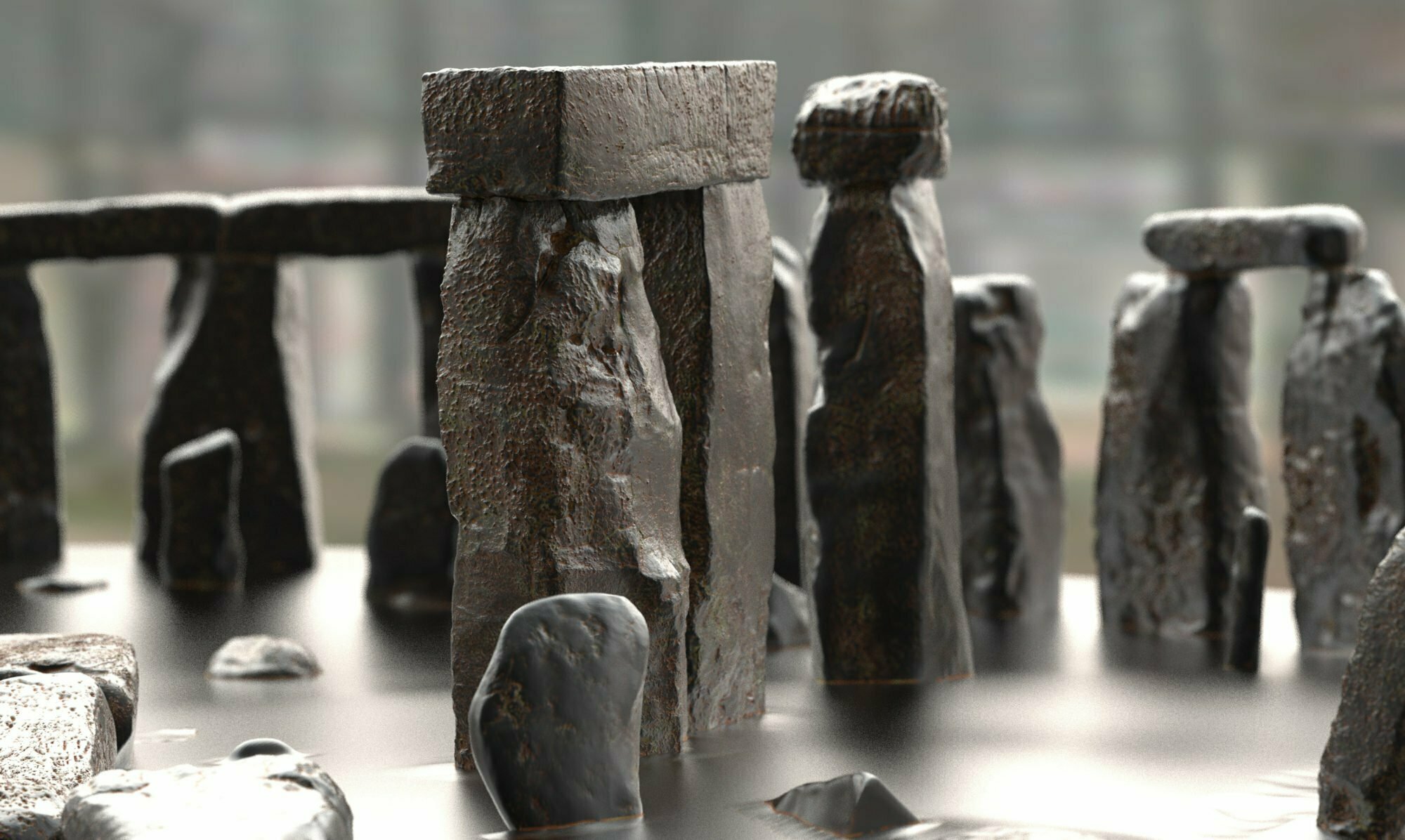
And here, 10 miles from the stones and dated to around 3,800 ya (BC 1,800), is a woman buried with the full toolkit of the most mysterious craft of her age. The daggers and axes carved into Trilithon Two, Stone 53, belong to roughly the same moment, ~3,800 ya (BC 1,800), and I’ve always read those as probably a bloke’s business. Fair enough. But the metalworking magic, ten miles up the road, was a woman’s.
A note of caution
“Shaman” is our word, not hers, a reading of the grave goods rather than a title anyone wrote down. And the full DNA study hasn’t been published yet, so this is the museum’s and the Crick’s account running ahead of the paper: worth keeping in the back pocket. The sex determination is the solid part, though, and it’s the part that rewrites the label on the case. As Mary Beard points out, we’ve long sexed old skeletons by our own expectations, a sword meaning a man, a necklace a woman, and the science keeps catching us out.
Source: The Guardian, 14 July 2026.