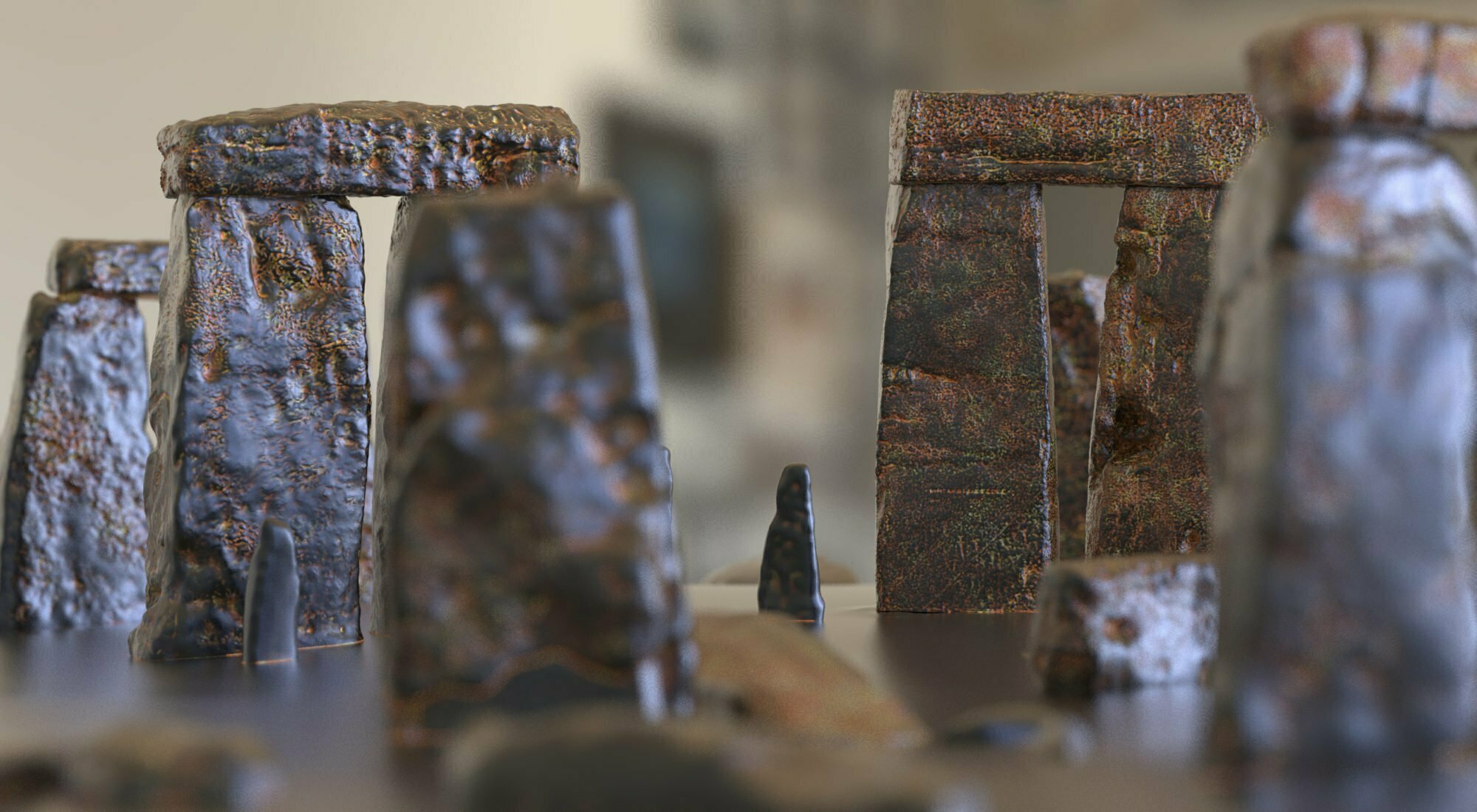
The glacial A303

They complained. Traffic past Stonehenge was glacial, they said, all because drivers slow down for a gawp at the stones. Little did they know. Four hundred and fifty thousand years ago the whole queue might have been sitting under an ice sheet.
Might. Hold on to that word; it does all the work in this post.

So they decided to build a tunnel. Under a UNESCO World Heritage Site. You cannot just dig; you have to check the buried history first. So they dug, and drilled, and augered, and trenched. Seven hundred times.
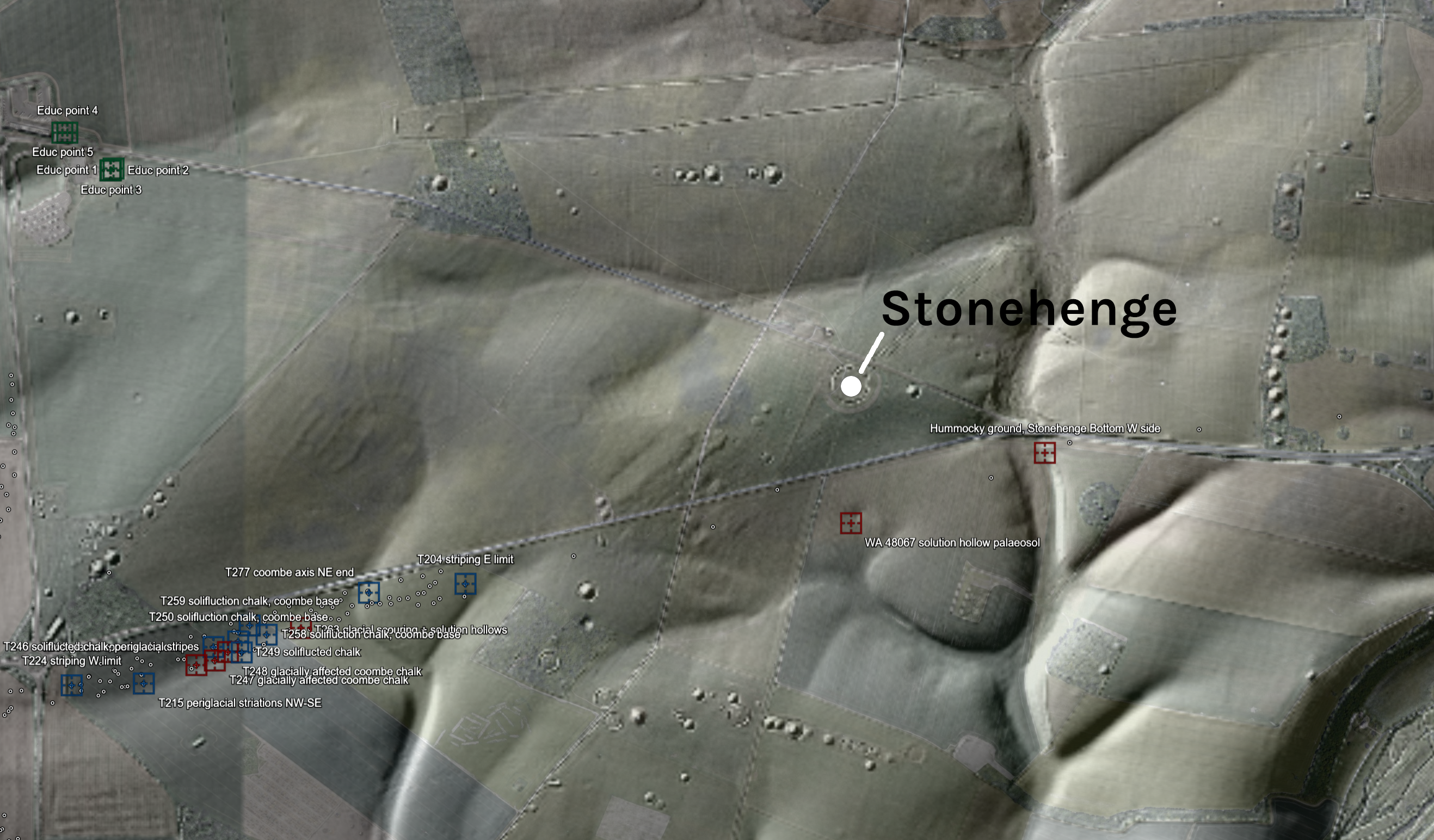
LiDAR relief image of rolling chalk downland with Stonehenge labelled and small coloured survey markers scattered across it
The survey area under LiDAR, gazetteer sites overlaid.
LIDAR: (c) Environment Agency copyright and/or database right 2026, Open Government Licence. Imagery (c) 2026 Google.

The picture above is the whole area under LiDAR, low sun from the north-west, every bump on Salisbury Plain standing to attention. The coloured squares are my gazetteer. Red for the primary records. Blue for trenches where the diggers wrote cold-climate words on their sheets. Grey for a line of auger holes, green for a 2023 evaluation by the visitor centre, purple for a borehole transect, orange for four drilled cores that went off to a laboratory and never came back. All of it lives in a Google Earth file you can spin round yourself. Turn the layers on and off. Fly about. It is the best free toy I have made all year.

I have read the lot. Forty-three public documents, 11,302 pages of borehole logs, trench sheets, laboratory appendices and method statements, put through a scanner with one question: ‘did anybody, anywhere along that road, record anything glacial?’ All from one road scheme, mind; Historic England’s own archive is another trawl for another day. What came back is not proof. Hints. But damn, some of them are suspicious.

Continue reading “The glacial A303”
Anyone but boring old nature

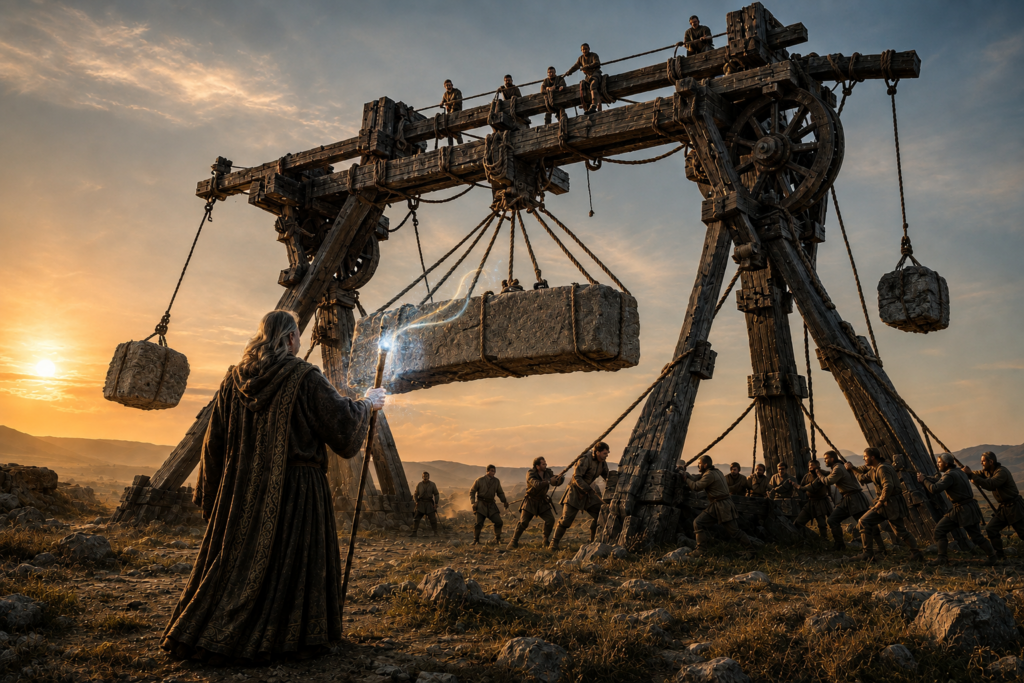
A robed, long-haired Merlin raises a glowing staff towards a stone lintel slung beneath an enormous timber gantry crane, while dozens of workmen haul on ropes below and sit astride the top beam at sunset
Geoffrey of Monmouth, AD 1136. Merlin, magic and machines, not muscle.

Nobody has ever wanted the boring answer. Nine hundred years of people explaining how the stones got onto Salisbury Plain, every one of them with a better version than the last, and not one of those versions has ever been “the ice put it there.”

Continue reading “Anyone but boring old nature”

Thursdays at Stonehenge, are usually strange

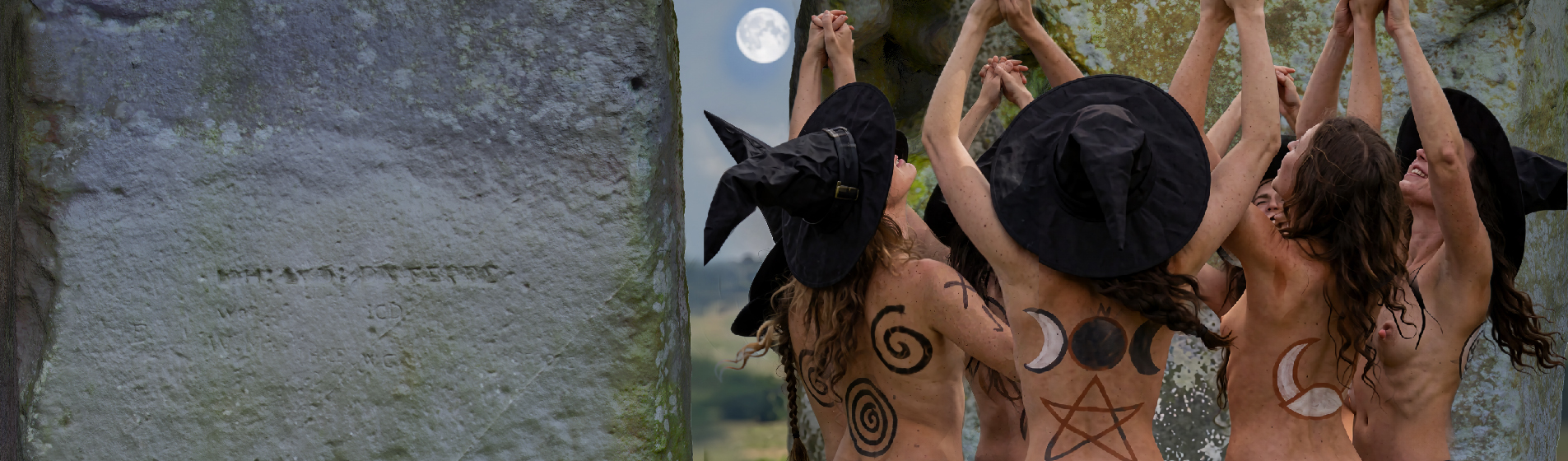
Skyclad witches dancing among the stones at Stonehenge by moonlight

Stonehenge has never been short of folk who reckon something unaccountable goes on… Far out there, man. Far out there.

The Devil got in first. Bought the stones off an old woman in Ireland, magicked them over by night, then chucked one at a friar who caught him at it. Hence the Friar’s Heel.

Then there’s the counting. Four hundred-odd years ago, back around Elizabeth I, it was held that nobody could count the stones twice and arrive at the same total, and that whoever managed it would come to a bad end. Nobody ever says what sort of bad end. That’s the trouble with a curse. No docket. No paperwork. Nobody to ring. No Google to query. No help’s coming. (I know that trick.)

The witches turned up considerably later. Skyclad rites at the stones are a 1950s and 60s invention, Wicca first, then the free festivals, yes, sometimes naked, but as ancient as a Ford Anglia. Hasn’t stopped anybody. Thursdays out there are usually strange.