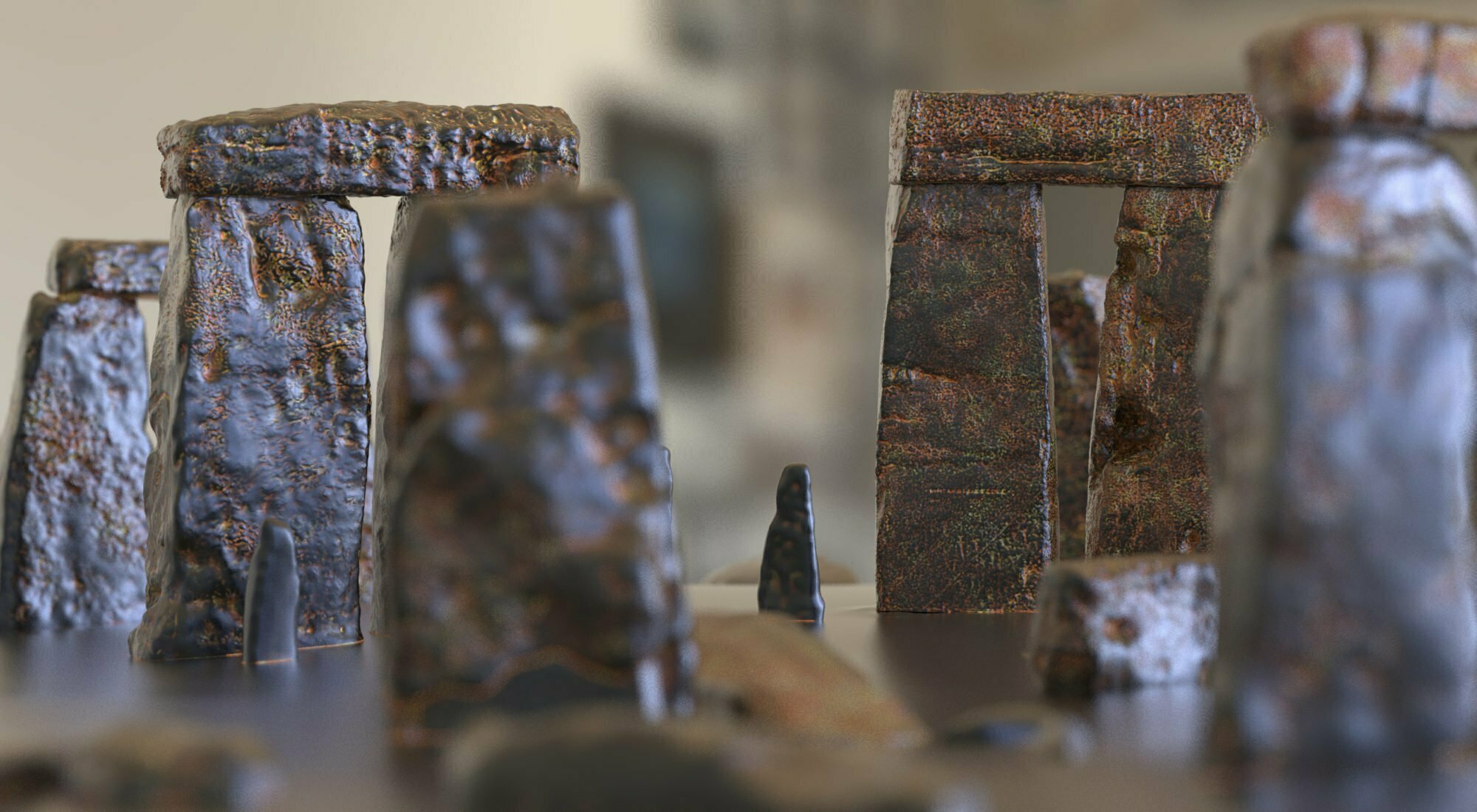
Nobody has ever wanted the boring answer. Nine hundred years of people explaining how the stones got onto Salisbury Plain, every one of them with a better version than the last, and not one of those versions has ever been “the ice put it there.”
Around 10,000 years ago (BC 8,000), somebody dug great holes in the chalk here and stood pine posts in them. Three of them at least, big ones, left to rot where they stood. The holes are still down there, under the turf where the visitors’ car park sat until they took the tarmac up in 2013. We haven’t the faintest idea what those people thought they were doing. Only that they reckoned this particular patch of nothing was worth marking, and that they did it a good five thousand years before anybody lifted a sarsen.
By 4,500 ya (BC 2,500) the builders are on the plain, hauling up stones that have got no business being there. Chalk downland. Chalk, flint, more chalk. And here’s a great slab of dull sandstone and a scatter of pretty volcanic rock from goodness knows where. Stand and look at that with a Neolithic head on and you’d reach for gods too.
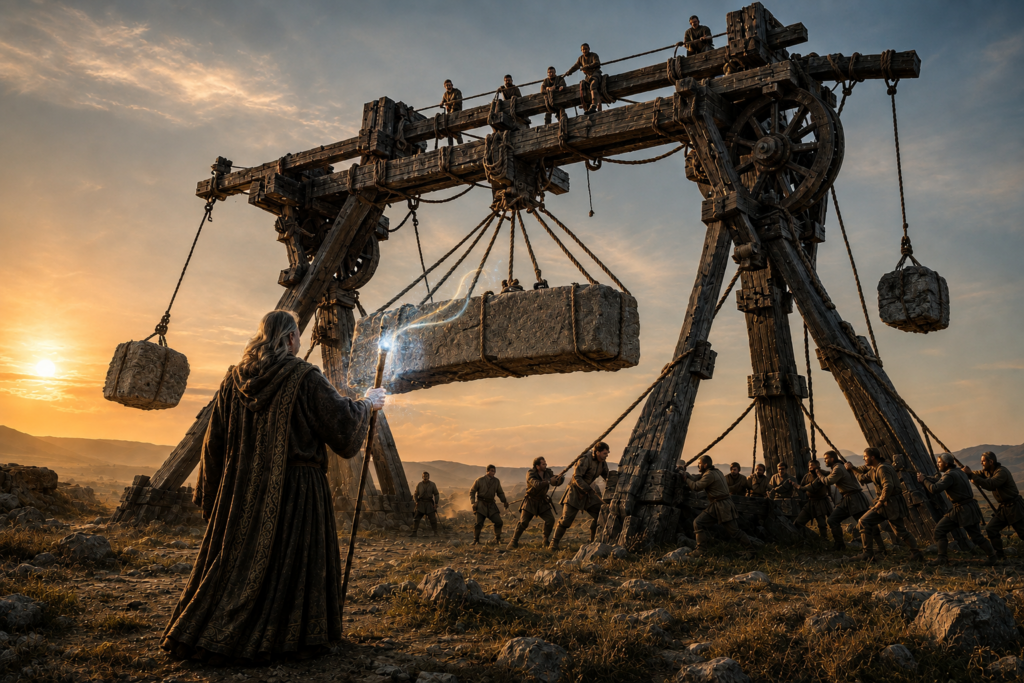
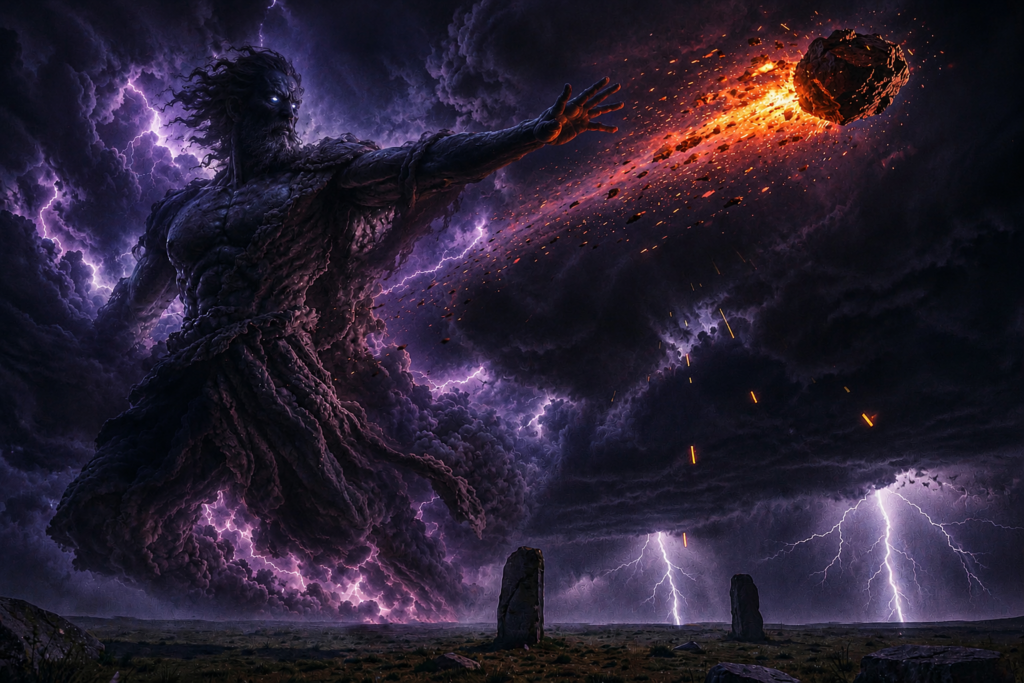
1136. Geoffrey of Monmouth writes it down, and he doesn’t do things by halves. Giants brought the stones from Africa to Ireland. Merlin then shifted the lot to Salisbury Plain at the request of King Aurelius Ambrosius. Not by hand. By machine and magic. Gear, engines, contraptions, spells. Even in the twelfth century somebody had sat down on a wet afternoon, did the sums, and decided muscle alone wasn’t going to cover it.
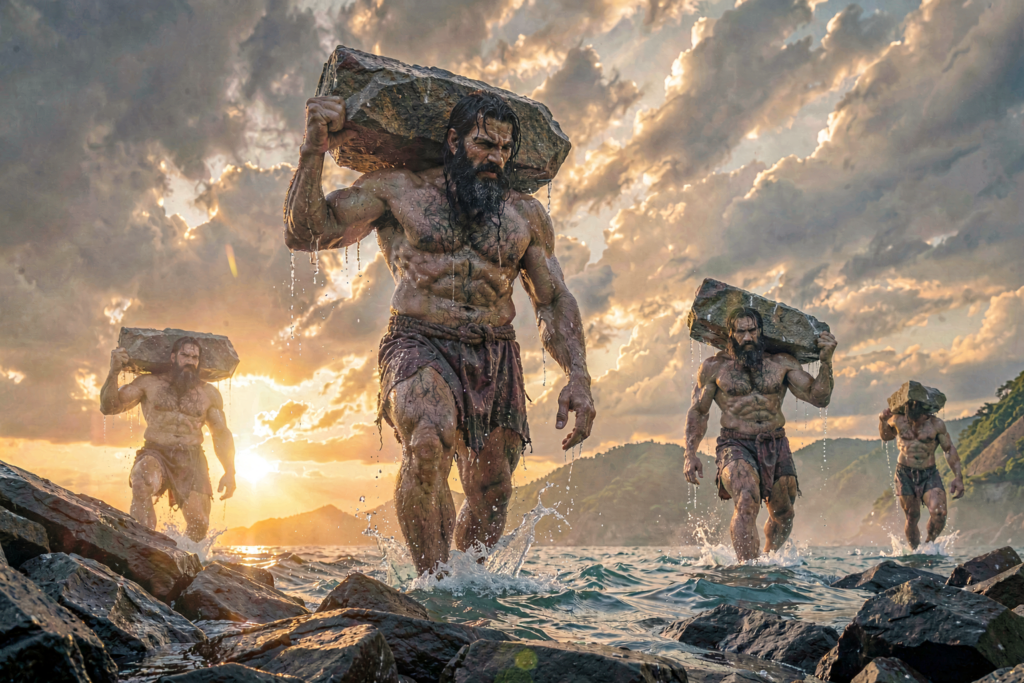
1923. H H Thomas gives us the modern one. He traces the bluestones to the Preseli hills of west Wales, declares glacial transport impossible, and concludes that men must have dragged every last one of them a hundred and fifty miles. That’s the paper. That’s the thing the last hundred years of Stonehenge tall tale writing is stacked on top of.
Eight hundred years apart, and it’s the same shape of story. Something extraordinary happened here, and people made it happen. Or magicians. Or giants. Or gods. Anyone but boring old nature.
Then 2024, and the Altar Stone turns out to carry a mineral fingerprint from north of the Iapetus Suture. Laurentia. Up there somewhere. The reporting settled on the Orcadian Basin of northeast Scotland, and a headline figure of 450 miles, and a number like that was always going to go straight down the mass media’s hatch. It’s a far better yarn than a boulder that turned up on its own. Even better, throw in a dog’s leg to Doggerland!
I’m an artist with a geology A level from fifty-five years ago, so weigh that however you like. But I think the Orkney attribution is overclaimed, and I’ll set that out properly another day. Short version: out of all the candidate sources, only Orkney and the Anglo-Welsh outcrops have been ruled out by somebody actually going there with a hammer and a bag. The rest were ruled out on paper. And the ice modelling that’s supposed to shut the door on a glacier only covers the most recent glaciation. Go back to the Anglian, around 478,000 ya, and ice was pushing up the Bristol Channel and into north Somerset. There are buried channels stuffed with till and outwash at Court Hill and Kenn near Clevedon, found when they cut the M5 through the ridge. How much further east that ice got, nobody knows, because every ice sheet scrubs out the evidence of the one before it. That isn’t me wriggling. That’s just what ice does.
My own money is on a lost source in the Clyde region, and I’ll make that case somewhere with more room in it.
But the Altar Stone’s birthplace isn’t the point of this post.
The point is that nobody has to be lying for any of this to happen. There’s simply no reward anywhere for saying “we don’t know, and the ice might have put it there.” It doesn’t sell a ticket. It doesn’t fill a lecture theatre. It certainly doesn’t get you a BBC documentary with a drone shot and a man in a fleece looking thoughtfully at the horizon. Gods, giants, Merlin’s machines, a Neolithic haulage epic across Wales, a boulder dragged down from the tippy-top of Scotland. They do all three.
A lie gets halfway round the world while the truth is still lacing its boots. Except this isn’t a lie.
Boring old nature has never had a publicist.
This started as a reply on r/Stonehenge to a paper putting the Altar Stone on a glacier across Doggerland, and carried on in a long back-and-forth under a YouTube video. Both worth a look if you want the argument in its natural habitat.